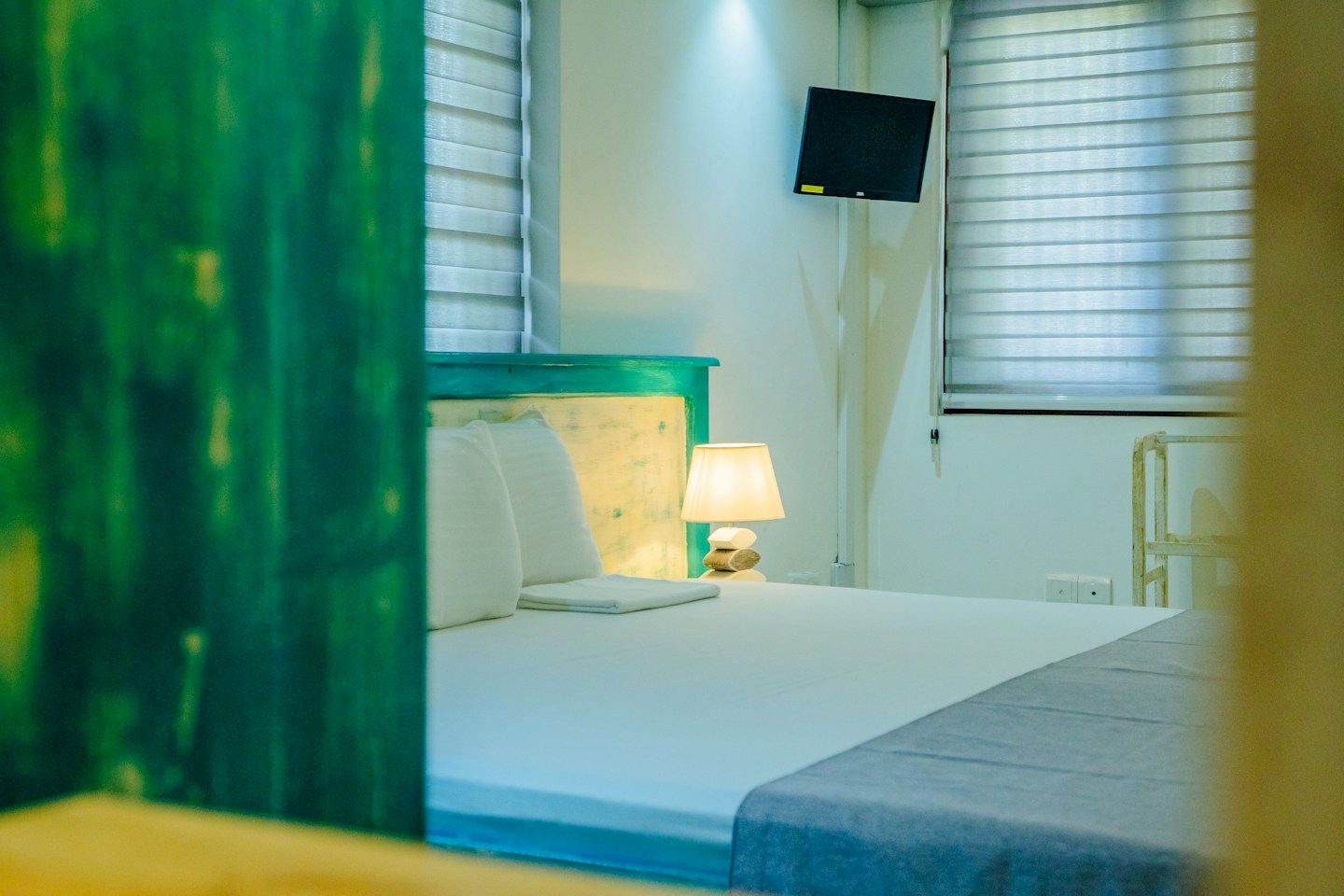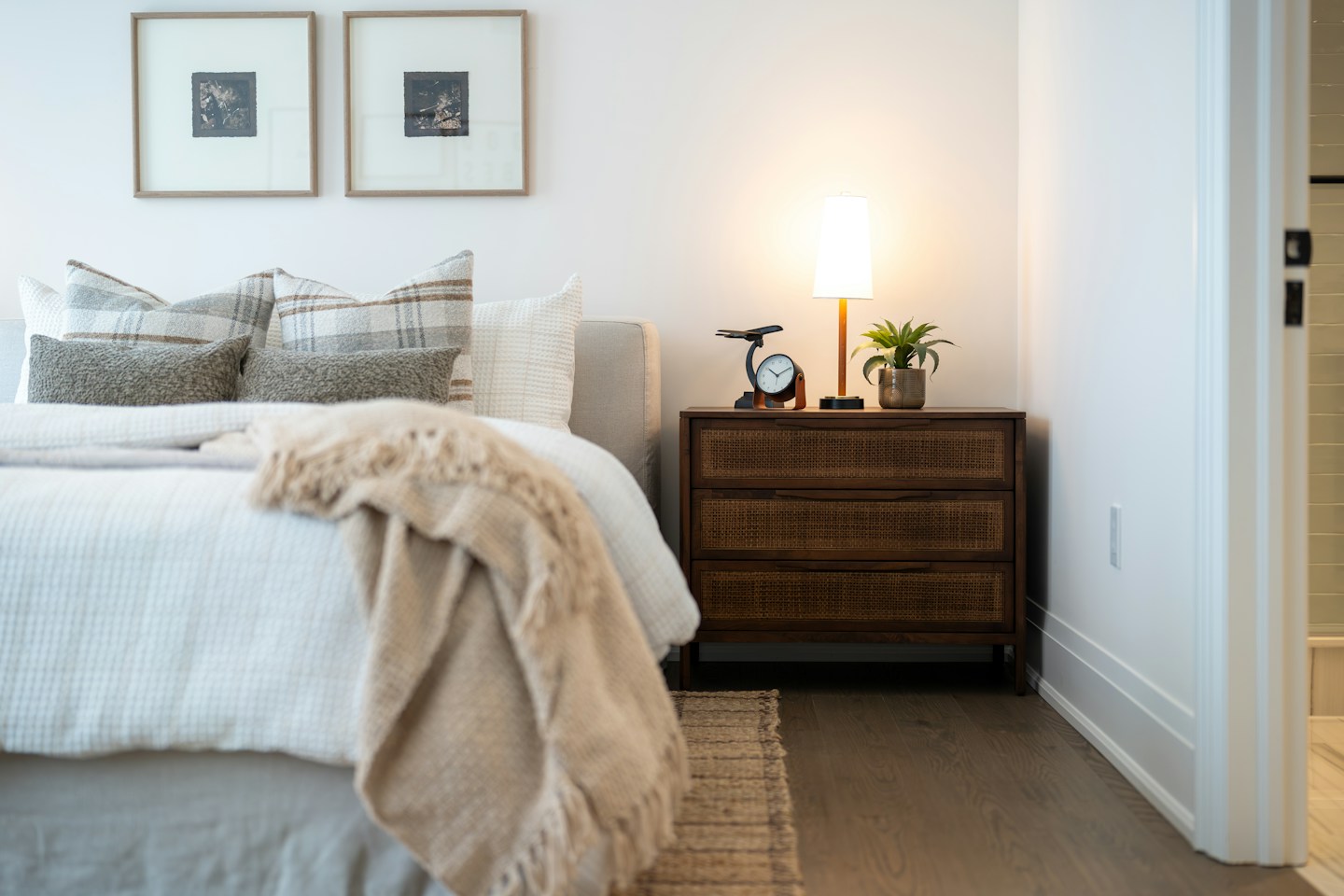
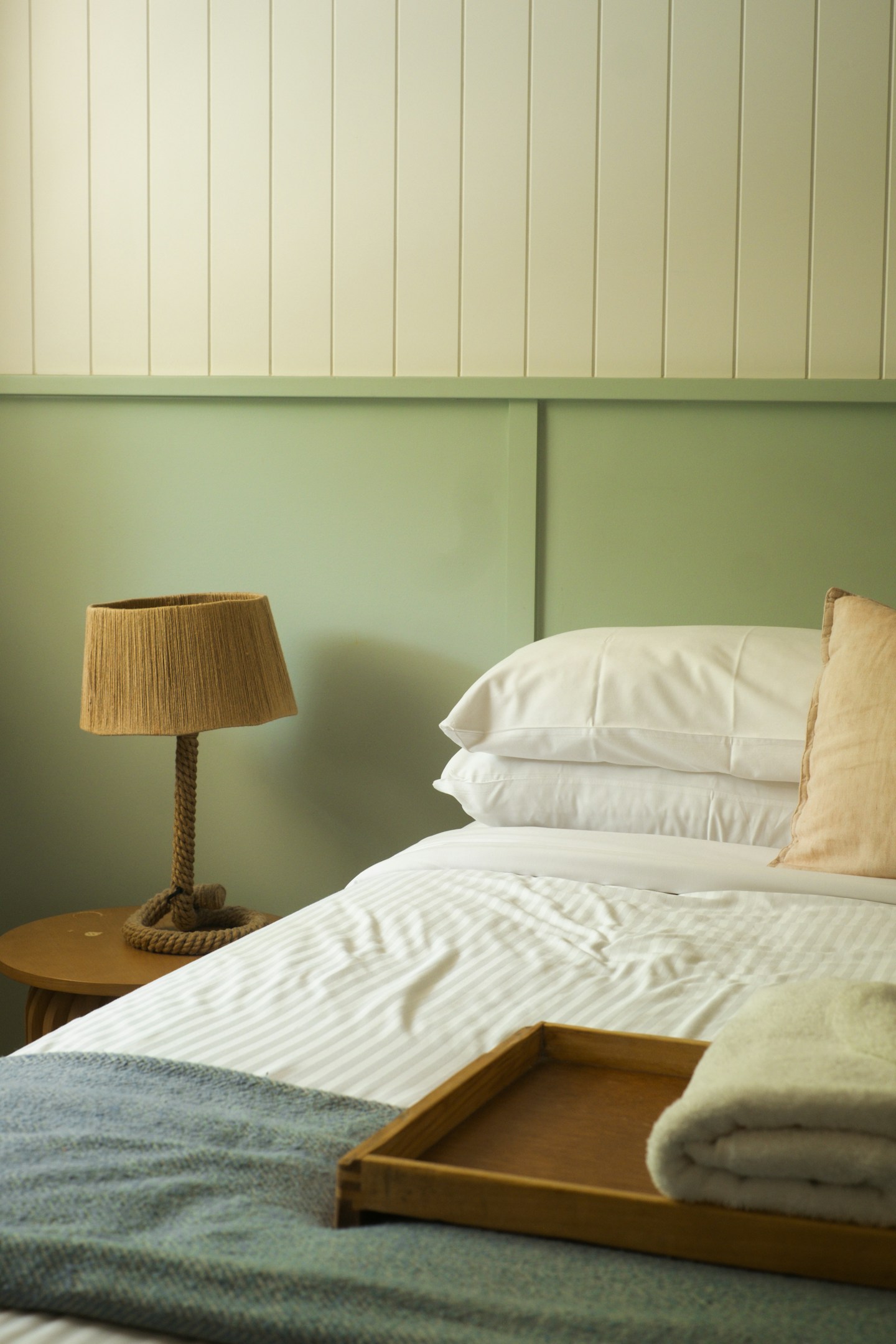
A guest bedroom often spends more time holding laundry, hobby materials, or work equipment than hosting visitors. That is not a failure. Spare space is useful, and a room can support ordinary life while remaining welcoming when someone stays. The challenge is to give each use a defined place and a simple transition. A guest should not have to sleep beside a precarious stack of boxes, and you should not need an entire weekend to clear the room. Design the changeover as carefully as the furniture arrangement itself.
Name the everyday purpose
Choose the main activity that happens between visits. A sewing space, reading room, or occasional desk each requires different storage and lighting. Avoid assigning five unrelated roles simply because the room is available. Describe the activity in concrete terms: a place to sew and store fabric is more useful than a multifunctional room. Keep the equipment needed for that activity together. When its boundaries are clear, you can decide what must move for a guest and where it will go. Without those boundaries, the room tends to become a general overflow area with a bed hidden inside it.
Check the sleeping arrangement honestly
An existing bed may be the most comfortable option, even if a convertible piece promises more floor space. If considering a sofa bed or folding bed, try its open form and assess the mechanism, mattress, weight limits, and access around it. Follow the maker's instructions and never treat an occasional seat as a bed unless designed for sleeping. Measure the full open footprint, not just the closed dimensions. A desk that prevents the bed opening defeats the purpose. Guests should be able to reach the door, window controls, and a light without climbing over furniture or luggage.
Create a landing place for belongings
Visitors need somewhere to put a bag, hang a few items, and set down glasses or a phone. Reserve a small section of storage even if the rest of the wardrobe serves your household. A clear shelf and several empty hangers can be enough for a short stay. A stable luggage stand may help, but it should not obstruct the route around the bed. Avoid expecting guests to place a suitcase on top of delicate hobby work. Clear the landing place before they arrive so the room communicates that their belongings have a legitimate place in it.
Make work equipment easy to close away
If the room contains a desk, arrange it so papers and cables can be tidied without dismantling the whole setup. A shallow box for current paperwork and a dedicated drawer for small equipment may be sufficient. Lock away confidential documents and secure devices as appropriate. Do not leave sharp craft tools, small parts, or hazardous materials accessible to children staying in the room. Follow storage instructions for paints, adhesives, and other supplies. The guest changeover is a good moment to check that the everyday activity has not introduced unsuitable items into a sleeping space.
Keep bedding together
Store clean guest bedding as a complete set, with pillowcases, sheets, and suitable covers in one breathable place. Ensure everything is fully dry before storage. Label the set by bed size if several rooms use different sizes. Wash and care for textiles according to their instructions, and check stored items before use rather than assuming they remain fresh indefinitely. Ask about practical needs such as warmth or allergies when appropriate, without making promises about an allergen-free environment you cannot guarantee. An extra blanket stored clearly is often more helpful than a bed piled with decorative cushions.
Provide straightforward lighting
Guests should be able to find the main switch and operate a bedside light without learning a complicated control system. Check the room after dark from the doorway and from the bed. A light near the desk may not help someone crossing the room at night. Use suitable products, keep leads out of walking routes, and follow electrical safety guidance. If a guest has limited mobility or vision, ask what would help rather than guessing. A clearly accessible lamp and a clear floor may be more useful than decorative lighting that looks attractive but leaves important routes in shadow.
Plan for a private, comfortable room
Check curtains or blinds from outside the room's usual viewpoint, especially after dark when interior light changes visibility. Confirm that window coverings can be operated safely and that the guest can reach them. Keep ventilation and heating controls accessible, following appliance guidance and any building requirements. A room used as storage may contain strongly scented products or recently finished craft work; move unsuitable items to proper storage and allow the room to air as appropriate. Do not mask a problem with fragrance. Guests vary in their preferences, and a simple neutral environment is easier to adapt.
Use one transition box
A single labeled box can hold the everyday objects that temporarily leave the desk or bedside area. Give that box a designated storage location elsewhere before a visit. It should not end up blocking a hall or another bedroom. Keep the contents limited to items that really need moving; a room that requires ten boxes may be carrying too much. After the guest leaves, return the items promptly so the transition system remains useful. This modest habit prevents a visit from scattering unfinished projects throughout the house and makes the next changeover much easier to repeat.
Explain the essentials simply
A small note can explain the internet connection, where extra towels are stored, and how to operate an unfamiliar blind or heater. Include only information the guest needs, keeping passwords private from public-facing photographs or listings. Make sure the instructions reflect the actual equipment. If there is a household routine that affects the room, mention it directly rather than relying on hints. For example, explain that a particular cupboard contains work materials while the open shelf is theirs. Clear expectations help visitors feel comfortable using the space without worrying about disturbing something important.
Build a short preparation routine
Create a sequence you can complete without thinking: clear the landing shelf, put work items away, make the bed, check the lamp, empty the bin, and place clean towels. Walk the route from the bed to the door with the room arranged for sleeping. Check that doors and required exits remain unobstructed. Open the cupboard intended for the guest to confirm it is usable. This review catches problems that a quick doorway glance misses. A predictable routine also helps when a visit is arranged at short notice, because the essential tasks are already known and the supplies are together.
Keep the room useful afterward
Once visitors leave, reset the room for its everyday purpose instead of leaving it halfway between roles. Launder used bedding, return the transition box, and note anything guests found awkward. Perhaps the bedside surface was too far away, or a drawer needed an obvious empty section. Improve those specific details before buying more furniture. A room earns its place in the home through both kinds of use. When the changeover is simple and repeatable, a guest bedroom can support daily creativity or work and still feel generous when someone comes to stay.
Keep the final preparation list somewhere easy to find.
Before the first visit, pack a small overnight bag of your own and place it where the guest's bag would go. Spend a few minutes using the room as a visitor: find a hanger, reach the lamp, and locate a towel. You may discover that an apparently empty shelf cannot be reached because the desk chair is in front of it. Correct those small access problems while the room is quiet, rather than expecting the visitor to solve them.
Have a correction or a question? Write to the Amenkingdj team.