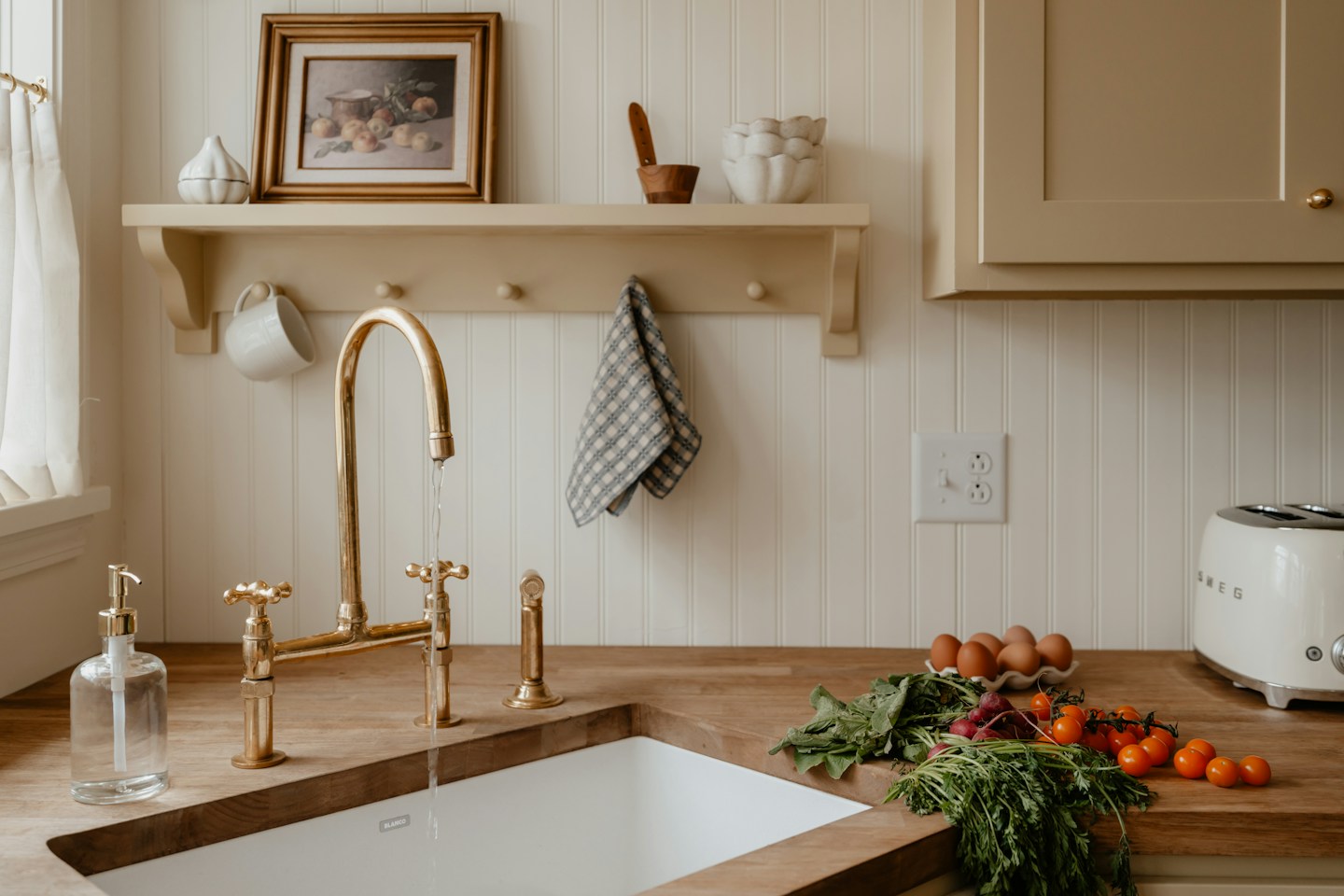
The space around a kitchen sink becomes crowded for understandable reasons. Washing-up liquid needs to be nearby, a wet chopping board needs somewhere to dry, and a mug often appears just after the dishes have been put away. The problem is rarely a shortage of decorative containers. It is usually that wet tasks, clean items, and food preparation all compete for the same small surface. You can improve this area without replacing the sink by assigning each task a place and keeping the busiest part of the counter available. Start with one ordinary meal and watch what happens around it.
Map the sequence of a meal
Follow ingredients from storage to washing, chopping, cooking, and clearing away. Note where plates arrive after the meal and where clean dishes return to cupboards. Your kitchen may not support a perfect uninterrupted sequence, but observing the real process reveals unnecessary crossings. If clean glasses must pass over a pile of dirty pans, a different drying position could help. If the chopping board has no landing place after rinsing, clear that area before buying accessories. The goal is a workable order within the kitchen you have, rather than forcing a fashionable planning diagram onto an unsuitable room.
Clear the sink edge first
Remove everything from the rim and surrounding counter, then clean the surfaces according to their material's care instructions. Return only items needed every day. A decorative bottle that is difficult to refill may be less useful than the original product container placed neatly in a washable tray. Keep cleaning chemicals labeled and stored safely away from children and pets. Never decant them into food or drink containers. If you use several products, check their instructions and do not mix chemicals. The sink edge should remain easy to wipe and should not become permanent storage for an entire cleaning cupboard.
Separate dirty and clean landing areas
Choose a clear place for used dishes waiting to be washed and another for items that have been cleaned. Even a small distinction helps prevent clean utensils disappearing beneath a greasy pan. Avoid placing ready-to-eat food where dirty dishes or raw-food equipment have been resting. Follow recognized food-safety guidance for handling raw foods and cleaning surfaces. A tray can define a temporary dirty-dish area, but it also needs washing and drying. If the counter is very small, work in stages: clear one batch, clean the surface, and then use it for the next task rather than stacking everything at once.
Size the drying rack for normal use
A rack should hold the dishes from an ordinary washing session without occupying the entire preparation area. Check how it drains and whether water collects beneath it. Choose a model you can take apart and clean, following its instructions. A rack that stores months of spare mugs is performing a cupboard's job badly. Put dry dishes away regularly and keep only items actually drying on it. Before buying an over-sink design, check stability, fit, load limits, and access to the faucet. It should not make washing large items awkward or encourage balancing heavy objects overhead.
Give boards and pans room to dry
Large flat items often block the rack because they need a different position from plates. Find a stable place where a washed board can dry as recommended for its material, with airflow rather than trapped moisture. Keep it away from heat sources unless the manufacturer specifies otherwise. Do not put a damp board into a closed narrow gap merely to clear the counter quickly. Large pans may need drying and returning directly to storage. Plan where they go while the rack is occupied, rather than relying on a precarious stack. A smaller number of items processed completely can be easier than one crowded pile.
Store tools near the task they serve
Place the scrubber, brush, and washing-up product close enough to use without dripping across the floor. Use a holder that drains and can be cleaned; trapped dirty water defeats the purpose. Keep food preparation tools distinct from cleaning tools where practical. Replace worn items and maintain them according to their instructions, rather than trusting a holder to keep everything hygienic indefinitely. If a drawer is nearby, reserve it for dry tools rather than putting wet items away. Convenience should support appropriate cleaning and drying, not simply hide a problem from view at the end of the day.
Protect the counter appropriately
Different counters tolerate water, heat, and cleaning products differently. Read the care information for your particular surface and use suitable mats or trays where recommended. Do not assume a material described as stone is unaffected by every acidic product, or that every wooden surface is finished the same way. Wipe standing water promptly, especially near joints and seams. Persistent swelling, staining, leaks, or failed seals may need professional assessment. Organizing the sink area can make those problems easier to notice, but it does not repair them. Address a leak before placing a basket in front of the evidence.
Keep electrical items away from splash
A kettle, toaster, or charging device should not sit where routine washing sends water toward it. Follow appliance guidance, outlet requirements, and local electrical rules. Do not improvise an extension lead across the sink area to make a coffee station fit. If outlet placement prevents a sensible arrangement, seek qualified advice. Cables should remain clear of heat and water and should not be trapped behind heavy appliances. When planning storage, include the appliance's operating footprint and ventilation needs. A tidy counter is not successful if using the appliance requires an unsafe temporary arrangement each morning.
Make under-sink storage easy to inspect
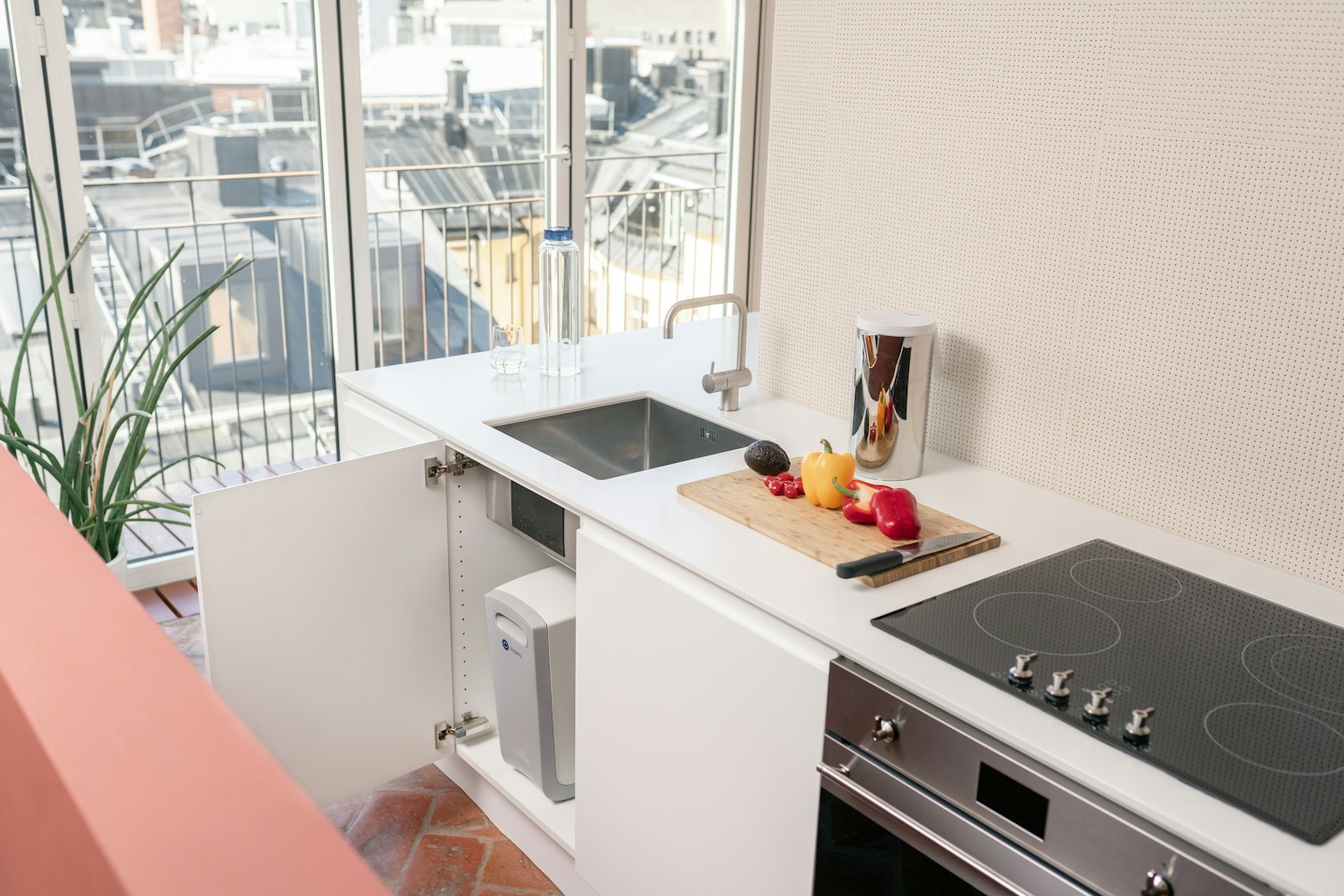
The cupboard beneath the sink often contains pipes, valves, and awkward corners. Keep access to plumbing and shutoff points clear. Use removable containers rather than building a dense arrangement that hides leaks. Store products upright and according to their labels, separating items that should not be kept together. If young children are present, use appropriate secure storage and remember that a simple latch is not a guarantee against access. Avoid storing food under the sink. Leave enough space to notice moisture and remove the contents quickly if a plumbing problem occurs.
Create an end-of-meal reset
A useful reset can be brief: put food away safely, deal with dishes, wipe suitable surfaces, empty the food-waste container as needed, and leave cleaning tools able to dry. The exact order depends on the meal and your kitchen. Share the routine with household members so everyone knows what finished looks like. It need not mean a completely empty counter. It means that the next person can wash hands, fill a glass, or prepare food without first dismantling the previous meal's work. Consistency makes a modest setup more effective than an elaborate system used only occasionally.
Review what keeps returning
After several days, look at the objects that repeatedly appear beside the sink. A pile of reusable bottles may need a designated cupboard; mail belongs outside the wet zone. If dishes never fully dry before another batch arrives, consider a different washing schedule or putting items away more often before buying a larger rack. Small kitchens benefit from completing tasks rather than storing every stage at once. Keep the arrangement easy to clean and adjust. A sink zone works well when it supports the next task naturally, with fewer obstacles and a clear distinction between washing, drying, and preparing food.
Try the arrangement with the largest item you wash regularly, such as a roasting tin. Check where it waits, how it fits in the basin, and where it can dry without covering the entire counter. If that single item disrupts the system, give it a direct wash, dry, and put-away sequence rather than enlarging permanent storage for an occasional task.
Have a correction or a question? Write to the Amenkingdj team.