Outdoor dining sounds simple until the first meal reveals the awkward details. The table rocks on a paving joint, a chair blocks the door, and carrying plates outside takes several trips through a narrow route. A comfortable dining corner does not need an elaborate outdoor kitchen. It needs a stable place to sit, enough room to move, and a manageable transition from preparing food indoors to enjoying it outside. Plan around an ordinary weekday meal rather than a large celebration. If the arrangement works when time is short and nobody wants extra work, it is far more likely to be used regularly.
Choose the meal the space should support
Decide whether the main purpose is coffee for two, lunch for a family, or occasional entertaining. A table sized for the rare largest gathering may occupy the whole patio every day. Start with the most frequent use and plan a realistic occasional alternative. Count the seats that need to remain in place and those that can be stored. Consider how long people usually sit and whether they need supportive chairs rather than stools. A compact dining area should feel comfortable during the actual meal, not merely accommodate the theoretical number of places shown in a product photograph.
Measure furniture while it is occupied
The table's dimensions are only part of the footprint. Allow space to pull a chair out, sit down, stand, and pass behind someone. Test the arrangement with existing furniture or safe temporary markers before purchasing. Open the nearby door fully and walk the route while carrying an empty tray. Keep access to gates, drains, meters, and required exits clear. If the site has an unprotected edge, steps, or uneven ground, address those conditions appropriately before using it for dining. A small table with comfortable access serves better than a larger one that makes everyone shuffle whenever another person moves.
Start with a stable surface
Check the condition and levelness of the ground under each furniture position. A chair leg caught between paving units can make an otherwise suitable set feel unstable. Use furniture according to its design and instructions, and do not rely on precarious improvised wedges. Repair damaged or unsafe surfaces with appropriate help. Keep the area free from slippery growth, loose debris, and objects that can catch a foot, cleaning materials according to their care guidance. After rain, observe how water drains. A dining corner that stays wet or develops standing water may need maintenance rather than a different tablecloth or more decorative planting.
Select furniture for your care routine
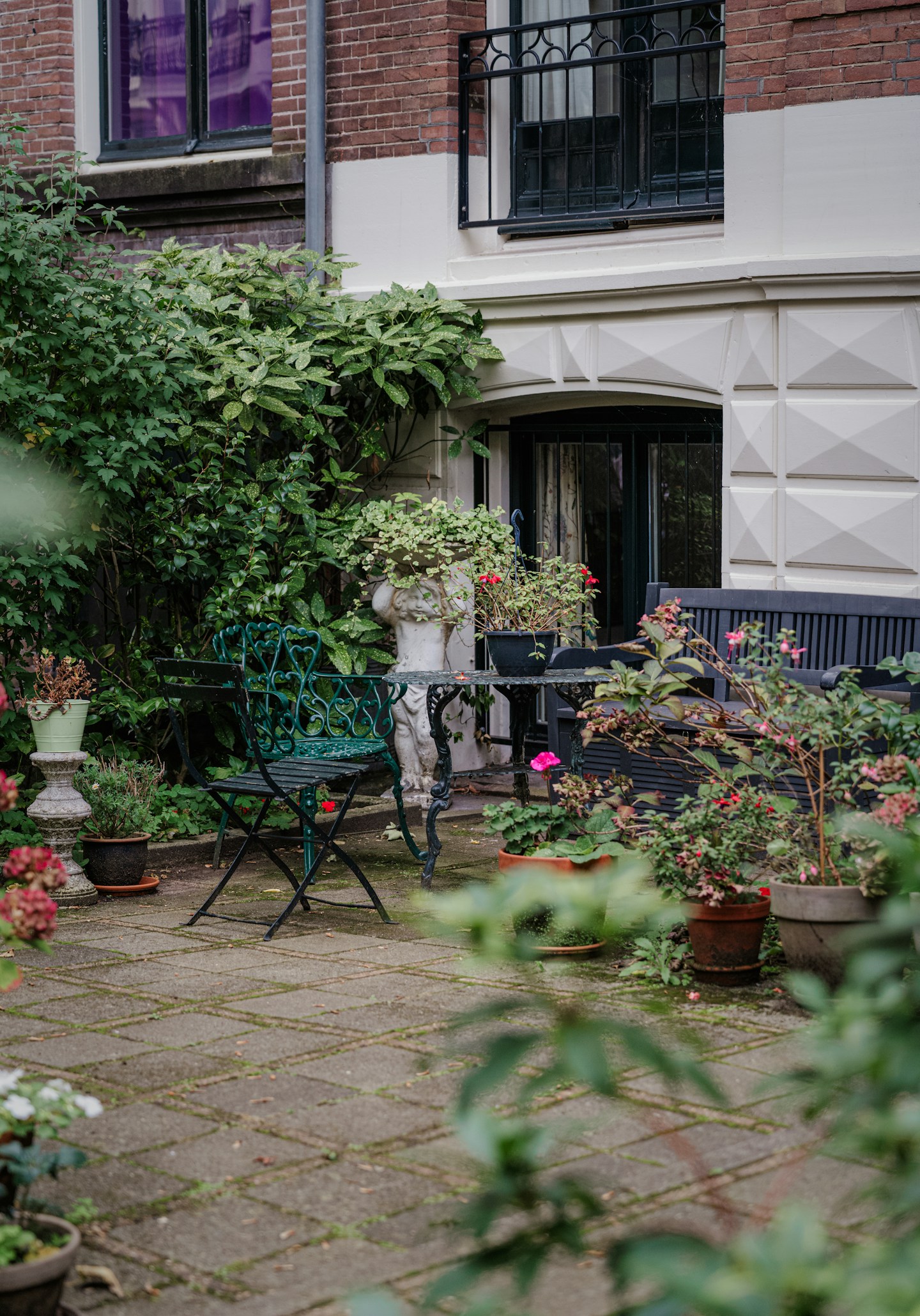
Outdoor materials differ in weight, weather tolerance, maintenance, and storage needs. Read the manufacturer's guidance for the actual product rather than assuming all timber, metal, or woven furniture behaves alike. Check fixings and moving parts periodically. Folding chairs can be useful, but their locking mechanisms and stability matter. Heavy furniture may stay in place more easily but can be difficult to move for cleaning or winter storage. Think about who will handle it. Choose a set whose care you can realistically provide, including covering or storing it when required. A low-maintenance claim should be supported by clear instructions, not treated as permission to ignore the furniture indefinitely.
Keep the serving route simple
Place the dining corner close enough to the kitchen to make carrying food and clearing dishes straightforward, while preserving safe routes and respecting the conditions of the site. Avoid a path that requires squeezing past plant pots or stepping over a hose. If a tray helps, choose one that is stable and comfortable to carry without overloading it. Make several manageable trips rather than balancing too much. Keep hot dishes protected and use appropriate surfaces or trivets according to the table's care instructions. A small clear landing place near the door can be useful, provided it does not become an obstruction or a place where food is left unattended.
Plan shade and exposure
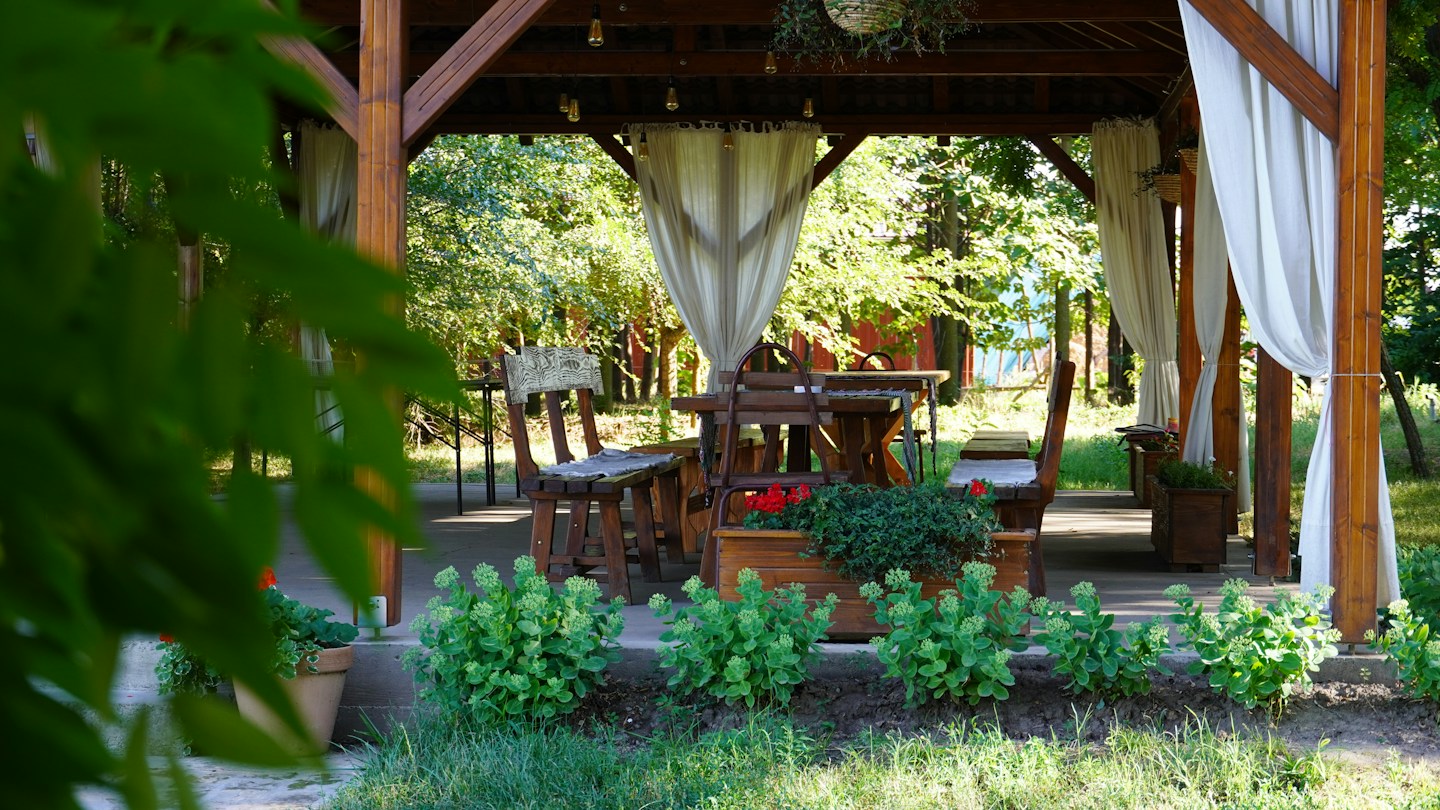
Sit at the proposed table during the hours you expect to eat. Notice direct sun, wind, and reflections from nearby surfaces. A shade product should be suitable for the site, correctly secured, and used within its weather limits. Follow instructions for closing or storing parasols and similar equipment. Fixed structures may require permissions and professional installation. Do not attach improvised fabric to an unsuitable support. Sometimes moving the table slightly or choosing a different meal time is the simplest adjustment. The best position balances comfort with access, rather than solving one problem by creating a long or unsafe serving route from the house.
Let planting frame the area
Plants can make a dining corner feel settled, but they need not surround every chair. Keep containers clear of movement and leave access for watering and maintenance. Choose species suitable for local conditions and check relevant safety information where children or pets use the space. Consider mature size rather than only the size at purchase. Avoid placing a heavy pot where it could be knocked from an edge or where its weight exceeds the supporting structure's capacity. If uncertain about a balcony or raised terrace, seek building advice. A few well-positioned containers can give the table a pleasant setting without turning every meal into an obstacle course.
Keep food handling ordinary and safe
An outdoor table does not change the basic need for appropriate food storage and handling. Follow recognized food-safety guidance for keeping perishable foods at safe temperatures, preventing cross-contamination, and returning or discarding food as appropriate. Bring out manageable amounts and protect dishes from contamination. Keep clean serving utensils separate from those used for raw foods. If cooking equipment is involved, follow its instructions, local rules, and fire-safety requirements, with safe clearances and ventilation. Do not use equipment in an enclosed or unsuitable space. A comfortable dining setup should make safe habits easy rather than encourage food to sit outside simply because the table looks attractive.
Provide light for people and routes
If meals continue after dark, ensure people can see the table, the route to the door, and any steps. Use suitable outdoor-rated lighting and seek qualified advice for fixed electrical work. Avoid loose cables across paths and indoor electrical products in exposed outdoor locations. Position lights with consideration for neighboring windows and local requirements. Decorative candles introduce fire risks and are not a substitute for useful route lighting; choose and use any open flame only under appropriate safe conditions. A simple light near the dining area may be enough when combined with a clearly visible path. The goal is easy movement and comfortable conversation.
Store the things that make meals easier
Keep outdoor dining essentials together somewhere appropriate: perhaps a tray, washable place settings, and suitable cushions if you use them. Store clean textiles dry and follow their care instructions. Do not keep food or dirty utensils in an outdoor box that attracts pests or creates hygiene problems. Check storage lids and catches for safe operation, especially around children. If every meal requires retrieving ten accessories from different rooms, reduce the setup. A practical corner should be ready with a few simple actions. The most useful objects are those that improve comfort or serving and can be cleaned and put away without a complicated routine.
Make clearing away part of the design
After a meal, return food and dishes promptly as appropriate, wipe the table with a suitable method, and put away items that should not remain outdoors. Check chair positions so the route remains clear. Follow furniture and shade-product instructions if weather changes. Notice what repeatedly causes delay: cushions with no dry storage, a tray too large to carry comfortably, or a chair that must always move for the door. Improve that detail before adding anything decorative. An outdoor dining corner succeeds when a normal meal feels easy from the first trip outside to the final reset, making the space part of everyday life rather than a special project.
Have a correction or a question? Write to the Amenkingdj team.