A labeled pantry can be helpful, but a neat row of jars is only part of the job. The useful information includes what a food contains, when it should be used, how it must be stored, and sometimes how to prepare it safely. Transferring food into a container can make a shelf easier to navigate, yet it can also separate the contents from essential details. A good labeling system keeps convenience and information together. Begin with the way your household shops and cooks, then choose a simple method that remains clear when a package changes or a different person prepares dinner.
Decide what benefits from a container
Some dry goods are easier to scoop or see in a suitable reusable container. Others already come in packaging that seals well, fits the shelf, and carries useful instructions. Do not decant everything automatically. Check whether a container solves a real problem such as torn packaging, awkward access, or poor visibility. Consider the work involved in washing, drying, labeling, and transferring. If the original packet works, placing it in a shallow basket may be enough. Uniform appearance is optional. The priority is keeping food appropriately stored and identifiable, especially in a household with allergies or several people sharing cooking tasks.
Choose suitable food storage
Use containers intended for food and appropriate to the contents, following their care and storage instructions. Check seals, lids, and any limitations on heat or cleaning. Clean and dry containers thoroughly before filling them. Do not reuse an unknown chemical container for food, even if it appears clean. Size containers to the amount normally purchased rather than buying oversized jars that leave little shelf space. Heavy glass can be useful but may be awkward to lift from a high cupboard. Consider weight, breakage, reach, and the person using the pantry. The safest, easiest container may differ from the one that photographs best.
Keep the original information
Before discarding packaging, retain the ingredient list, allergen information, use-by or best-before guidance, lot details where useful, and preparation instructions. You can keep a clean section of the package in a labeled folder or another accessible format, provided it remains clearly linked to the food. A photograph may help, but it must be readable and easy for household members to find. Do not rely on memory for allergens or cooking directions. Formulations and instructions can change between purchases. When replacing a product, check the new packaging rather than assuming it is identical to the last version because the front label looks familiar.
Label for action rather than decoration
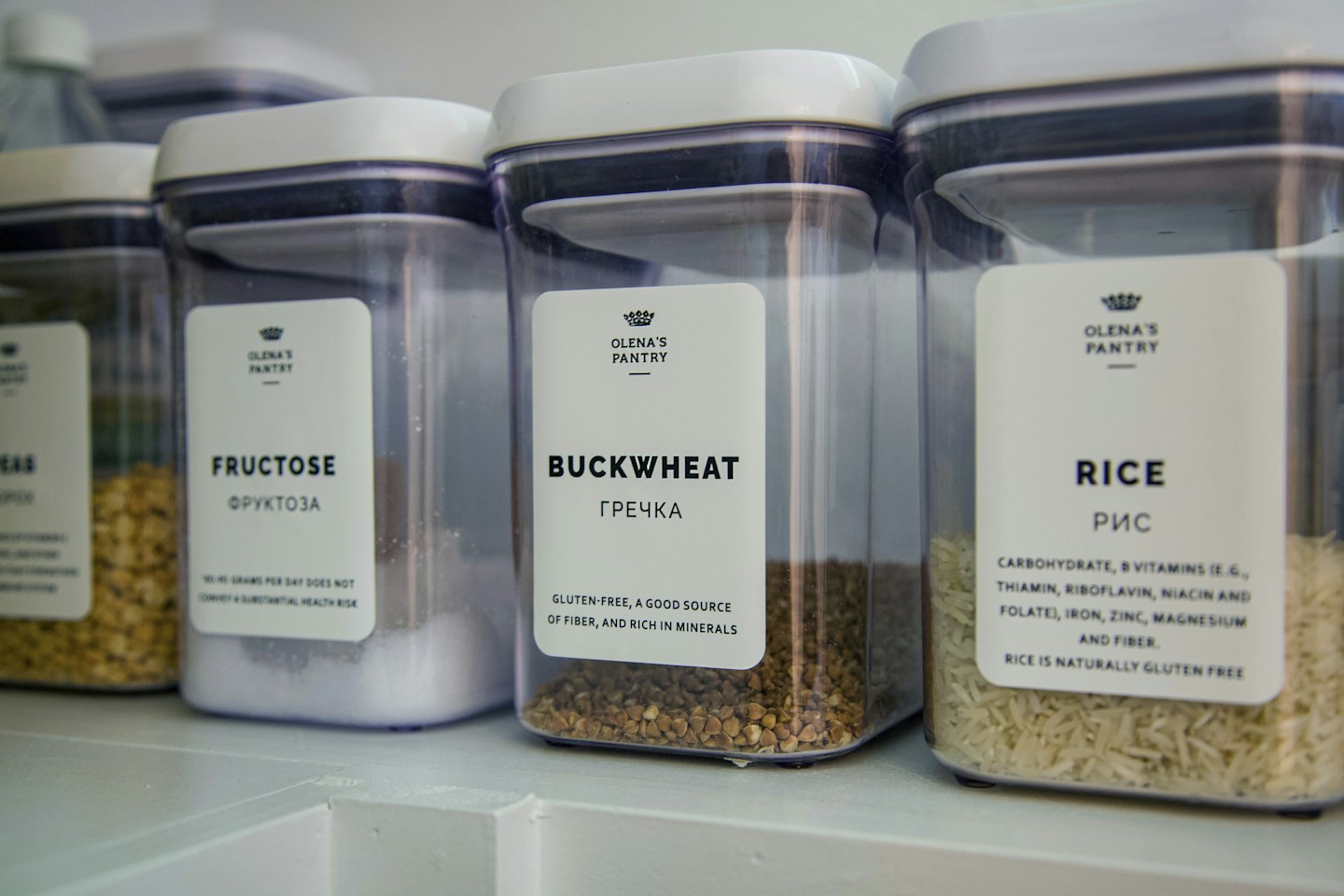
A useful everyday label starts with the food's clear name. Add the opening or transfer date if that helps your routine, and preserve the relevant manufacturer date information separately or on the container. Do not invent a universal expiry period for all dry goods. Storage life depends on the product, packaging, conditions, and instructions. If two similar foods need different preparation, make the distinction obvious. For example, different grains should not share a vague label that leaves the cook guessing. Use readable lettering and a label material suitable for the container's cleaning needs. The label should remain useful after ordinary handling, not only on the first day.
Avoid endlessly topping up old stock
Pouring a new packet over older contents makes dates and stock rotation harder to follow. Plan to finish a batch, clean and dry the container as appropriate, and refill it with clearly identified new stock. If a purchase must overlap, keep the new sealed packet separate until needed. Follow product guidance and consider allergy or cross-contact concerns when changing contents. Do not transfer a different food into a container while leaving the old label in place. The pantry should communicate what is actually inside. A small pause before refilling is easier than trying to reconstruct several mixed purchases later.
Make shelf groups fit your cooking
Group foods by the way you use them: everyday cooking ingredients, baking supplies, breakfast items, or snacks. Keep categories broad enough that putting groceries away is straightforward. Place frequently used items where they can be reached comfortably, and keep heavy containers in appropriate lower locations. Follow shelf load limits and ensure storage furniture is stable and secured as recommended. A shallow basket can collect small packets, but it should not hide everything behind a tall front edge. The objective is a clear view and an easy return path. A pantry that requires careful staging after every meal will not stay useful for long.
Use an eat-first area thoughtfully
Set aside a small, visible location for suitable foods that should be used sooner, based on their labels and condition. This can help when a cupboard contains several partly used packets. Keep the area limited and review it regularly. Do not treat it as permission to use unsafe, damaged, or improperly stored food. Follow recognized food-safety guidance and product instructions, paying particular attention to use-by dates where applicable. If you are unsure about a food's safety, seek authoritative guidance rather than relying on appearance alone. An eat-first section should reduce forgotten stock, not become a permanent collection of questionable leftovers.
Account for allergies and shared use
In a household managing food allergies, clear original information and appropriate separation matter more than matching jars. Follow advice from qualified health professionals and recognized allergy organizations for the specific situation. Avoid broad claims that a home organization system can prevent every cross-contact risk. Keep dedicated tools or storage where advised, and make labels understandable to anyone preparing food. Visitors and babysitters may not know the household's informal shorthand. If a product's identity or ingredients become uncertain, do not guess. Organization can support a safe routine, but it must preserve reliable information rather than replacing it with decorative labels or assumptions.
Keep the cupboard suitable for food
Check the pantry for moisture, excessive heat, damaged packaging, or signs of pests. Store food according to its label and keep cleaning chemicals elsewhere. Clean shelves using a method suitable for the surface, then allow them to dry before returning food. If pests or contamination are suspected, follow appropriate local food-safety and pest-control guidance rather than simply transferring contents into prettier jars. Do not conceal a damp patch behind a basket. The condition of the storage area is part of the system. Labels cannot compensate for unsuitable conditions or a problem that needs maintenance.
Connect stock to a shopping list
Choose one simple signal that an item needs replacing, such as opening the last sealed spare or reaching a marked amount appropriate to your household's use. Add it to a shared list immediately rather than depending on memory. Check the cupboard before buying bulk quantities, and consider whether you can use and store them properly. The cheapest unit price is not always economical if food is forgotten or containers occupy all the usable space. Keep a realistic reserve of staples, with dates visible. A pantry works best when purchasing and storage support each other rather than creating a cycle of duplicates.
Review the system after several meals
Watch which labels people read and which containers remain untouched. If someone repeatedly opens the wrong jar, improve the distinction. If a basket hides ingredients, make it shallower or reduce its contents. Check that essential packaging information is still linked to each food and remove outdated references when products change. You do not need a professionally styled pantry to cook efficiently. A few clear groups, appropriate containers, reliable labels, and a habit of checking stock can make a modest cupboard much easier to use. The finished system should help you recognize, prepare, and use the food you own with less searching and less guesswork.
Have a correction or a question? Write to the Amenkingdj team.