
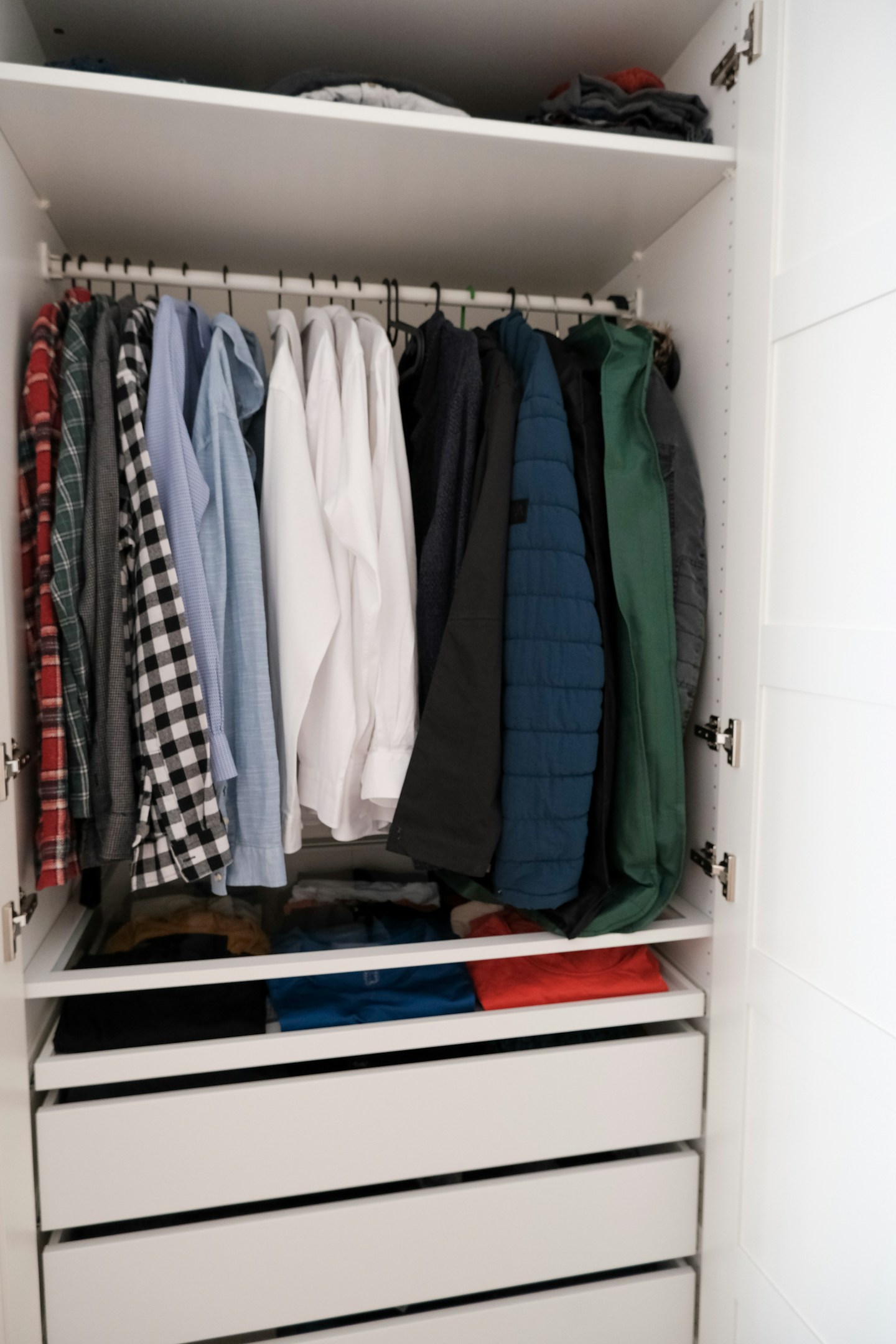
A wardrobe often becomes difficult to use long before it is completely full. Hangers catch, clean clothes have nowhere obvious to go, and a favorite shirt disappears behind items kept for a different season. The solution is not necessarily a new storage system. It is a clearer relationship between the clothes you wear, the way they are cared for, and the space available. A practical reset begins with ordinary dressing and laundry habits. Once those are understood, shelves and drawers can support the routine instead of asking you to maintain an elaborate arrangement that falls apart after one busy week.
Start with a normal week's clothing
Look at what you actually wear during work, home time, exercise, and outings. Include the clothes needed for your current climate and routine. This does not mean everything else must go, but frequently worn items deserve the easiest access. Notice the garments repeatedly retrieved from a laundry basket because their cupboard location is inconvenient. They are telling you where the system breaks down. Set aside a manageable section to reorganize first, such as everyday tops, rather than emptying the entire wardrobe if you cannot finish the task. A completed small improvement is more useful than an abandoned roomful of piles.
Separate decisions from storage
Sort items into clear groups: ready to wear, needing repair or cleaning, seasonal or occasional, and no longer wanted. Keep the repair group limited and give it a next action. A bag of clothes labeled later can occupy valuable space indefinitely. Follow garment care labels, especially for delicate materials or stains requiring specialist treatment. Avoid storing damp or unclean clothing among ready-to-wear items. When considering donations or resale, check local requirements and describe condition honestly. The purpose of sorting is to remove unresolved tasks from daily dressing, not to force quick decisions about every sentimental garment in one sitting.
Measure the usable wardrobe
Record rail length, shelf depth, drawer dimensions, and the clearance needed for doors. Check whether a hanging garment catches on the shelf below or folds against a closed door. Adjustable components should be moved only according to the furniture's instructions, with supports secure afterward. Follow load limits and anchoring guidance, and seek suitable help for damaged or unstable furniture. Do not install extra rails or shelves without understanding how the structure carries weight. Measurements keep accessory purchases realistic. A neat organizer that prevents a drawer closing or hides items at the back is simply another obstacle in a crowded space.
Group hanging clothes by how you choose them
Some people dress by garment type; others think in work outfits or activity groups. Choose broad categories that make sense to you and others sharing the wardrobe. Keep long garments together where the rail has sufficient drop, and avoid forcing delicate items onto unsuitable hangers. Use hangers appropriate to the garment and follow care advice where relevant. Matching hangers can reduce tangling, but replacing all of them is not a requirement. First remove broken or unsuitable ones and give garments enough room to slide. The useful test is whether you can take out one item and return it without disturbing a whole section.
Make drawers readable from above
A drawer works best when opening it reveals the available choices. Depending on the garment, folding into shallow rows may make items easier to see than tall stacks. Use a method compatible with the fabric and your willingness to maintain it. Drawer dividers can help broad groups stay separate, but too many small compartments may waste space. Leave room for the drawer to close without catching clothes. Do not compress delicate materials simply to fit an aesthetic arrangement. Try the method with one drawer for a week before changing all of them. The best folding system is the one you can repeat after doing laundry.
Give once-worn clothes a legitimate place
Clothes that are not ready for washing but should not return directly to clean storage often accumulate on a chair. Create a limited, appropriate place for them, such as a few hooks or a designated rail section, depending on the garments and available ventilation. Do not let this area become a second wardrobe. Decide regularly whether items can be worn again, need care, or should be put away. Keep the arrangement clear of heaters and exits, and install hooks safely. Acknowledging this middle stage is more realistic than expecting every garment to move directly between wardrobe and laundry basket with no pause.
Store occasional clothes without losing them
Seasonal and special-occasion items can occupy less accessible areas if stored clean, dry, and according to their material needs. Use suitable protective storage rather than assuming any sealed plastic bag is appropriate indefinitely. Label containers in plain language and keep a brief list if their contents are not visible. Avoid storing heavy boxes overhead where lifting them becomes unsafe. Check stored items periodically and before a season changes. The point is to release daily space while keeping the occasional clothes usable. If retrieving a winter coat requires dismantling half the room, the storage has moved the inconvenience rather than solved it.
Keep accessories near their companions
Belts, scarves, and small bags are easier to use when their homes are obvious. Group them by type or by the outfits they serve, without hanging so many items on one hook that the lower ones disappear. Protect delicate materials from sharp edges or unsuitable clips. Shoes need an appropriate clean, dry storage area, with care depending on material and use. Keep worn footwear separate from clean clothing where practical. A small container can prevent loose accessories spreading, but the container should be shallow enough to inspect. Visibility matters more than creating an elaborate arrangement for objects used only occasionally.
Make laundry return easy
Follow the path from drying to folding to putting away. If clothes remain in a basket because the wardrobe is too tightly packed, no folding tutorial will fix the main problem. Leave working space in drawers and on the rail. Put frequently laundered items in the easiest locations, and keep spare hangers nearby without allowing them to tangle across the whole section. Share the broad arrangement with anyone who puts laundry away. A simple label inside a drawer can help. The wardrobe should accept clean clothes without requiring you to rearrange its contents each time, otherwise even an attractive reset will be difficult to sustain.
Avoid buying storage before testing
Live with the revised groups using existing shelves, boxes, or dividers where suitable. Notice exactly what still needs help. A deep shelf might need a removable basket; a drawer might need only one divider. Buy to those measurements and tasks rather than purchasing a complete set because the containers match. Check that materials can be cleaned and will not snag clothing. Keep access to the back of the wardrobe and any relevant building features clear. Storage accessories should make existing capacity more usable. If they consume space, hide contents, or add another step to dressing, reconsider whether they belong.
Keep a small review habit
At the next seasonal change, review the items that were never worn and those that caused repeated frustration. A garment may be unsuitable for the current routine without being worthless; it can move to occasional storage or a thoughtful reuse route. Notice gaps before shopping so new purchases answer a real need. The wardrobe does not have to stay frozen in its reset arrangement. It should change as your work, climate, and preferences change. A useful system makes everyday dressing calmer, clean laundry easier to return, and the clothes you value easier to care for and enjoy.
Have a correction or a question? Write to the Amenkingdj team.